Most people only start thinking about their HVAC system when it stops doing its job. One room is cold. Another is way too warm. The furnace is loud, or the bills don’t make sense anymore.
That’s usually when someone asks, “What system should I replace this with?”
And honestly, that question doesn’t have a quick answer.
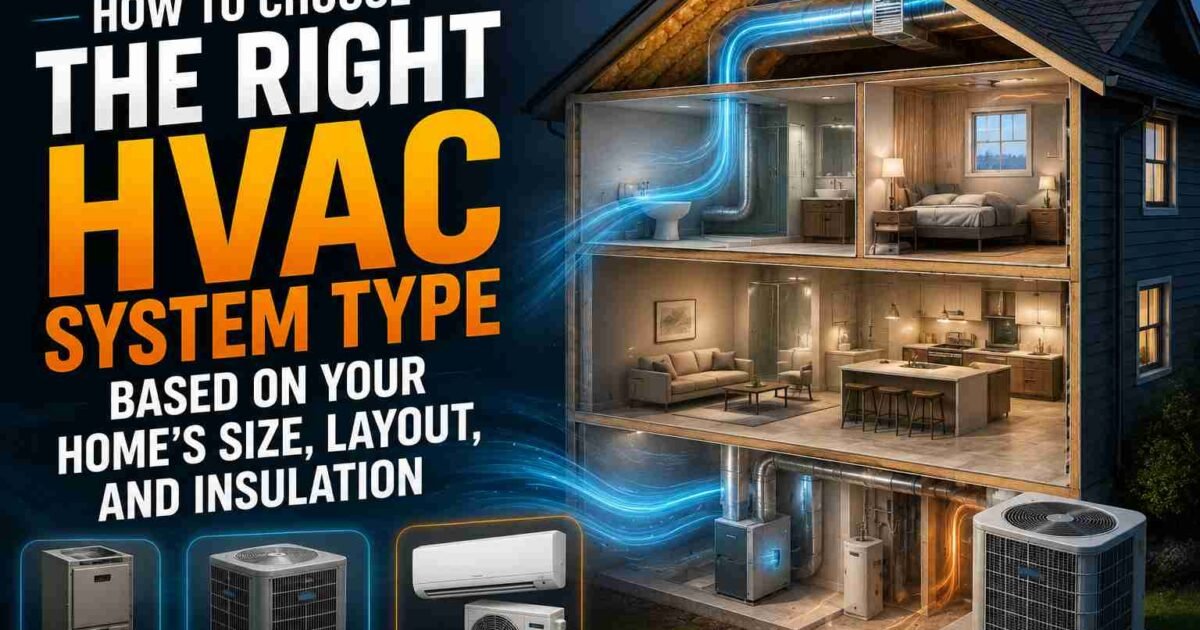
We see it all the time in Calgary. Homes that look similar on the outside need completely different setups on the inside. Size matters, sure—but layout and insulation usually matter more than homeowners expect.
Let’s Talk About Home Size (and the Common Mistake)
A bigger house doesn’t automatically need a bigger system. That’s one of the most common misunderstandings.
We’ve been in homes where the furnace was oversized because someone thought “extra power” was safer. It wasn’t. The system short-cycled, rooms felt uneven, and parts wore out faster than they should have.
On the flip side, undersized systems never catch up. They run all day and still leave cold spots behind.
Sizing has to be done properly. Guessing doesn’t work. Online calculators don’t tell the full story either.

Layout Causes More Problems Than People Realize
You can have the right-sized system and still be uncomfortable.
Multi-level homes are a good example. Heat rises. Basements stay cold. Upper floors don’t. That’s normal—but it doesn’t mean you have to live with it.
We also see this in older homes with narrow hallways and closed-off rooms. Air doesn’t move the way people think it does. Sometimes the issue isn’t the equipment at all. It’s how the house is laid out.
That’s where system choice—and sometimes zoning—actually makes a difference.
Insulation Is the Quiet Problem No One Notices
Insulation doesn’t get much attention because you can’t see it. But your furnace knows when it’s missing.
A lot of Calgary homes, especially older ones, lose heat through the attic or exterior walls. Homeowners replace the furnace and expect miracles. The comfort improves a bit—but not enough.
In some cases, fixing insulation first changes everything. The system doesn’t have to work as hard. Temperatures even out. Bills drop.
It’s not always about buying new equipment.
There Is No “Best” HVAC System
Anyone who tells you there’s one perfect HVAC system for every home is oversimplifying things.
Some homes work well with central systems. Others don’t. Homes without ductwork often need a different approach altogether. Renovations and additions change the rules again.
Heat pumps, hybrid systems, ductless setups—they all have their place. The right one depends on the house, not the trend.
Calgary Weather Makes the Decision More Serious
Heating systems in Calgary need to be reliable. Cold snaps don’t leave much room for error.
We’ve seen systems that worked fine elsewhere struggle here. That usually comes down to system choice or installation—not the brand name.
Local experience matters more than most people think.
Why an In-Home Assessment Is Worth It
Reading online helps, but it doesn’t replace walking through the house.
A proper assessment explains why certain rooms feel uncomfortable and why one system makes more sense than another. It prevents spending money on equipment that doesn’t actually solve the problem.
That’s what Rapid Response Heating focuses on. Real evaluations. Straight answers. No one-size-fits-all recommendations.
Final Thought
Choosing an HVAC system isn’t about buying the biggest unit or the newest model. It’s about understanding how your home actually behaves in winter and summer.
When size, layout, and insulation are taken into account, the result is a system that works the way it should.
If you’re planning a replacement and want advice that’s based on your home—not assumptions—Rapid Response Heating can help you make the right call.