People usually blame the weather first.
Spring allergies? Must be pollen outside. Waking up congested? Probably a cold. Dust showing up again after cleaning? Annoying, but normal.
Sometimes those assumptions are right.
Other times, the issue is inside the house.
Indoor air isn’t something most homeowners think about until comfort changes. The home feels stuffier. The furnace runs as expected, but rooms never seem completely fresh. Someone starts sneezing more in the mornings. You vacuum, wipe surfaces down, and somehow there’s another layer of dust before the week ends.
None of these signs prove your home needs a whole home air filtration system. Together, though, they can suggest your indoor environment deserves a closer look.
In Calgary, where homes stay sealed tightly for long winters and wildfire smoke occasionally becomes part of summer conversations, indoor air quality isn’t always a small issue.
First, What Does a Whole Home Air Filtration System Actually Do?
There’s a common misunderstanding that the filter already sitting in a furnace handles everything.
It doesn’t always.
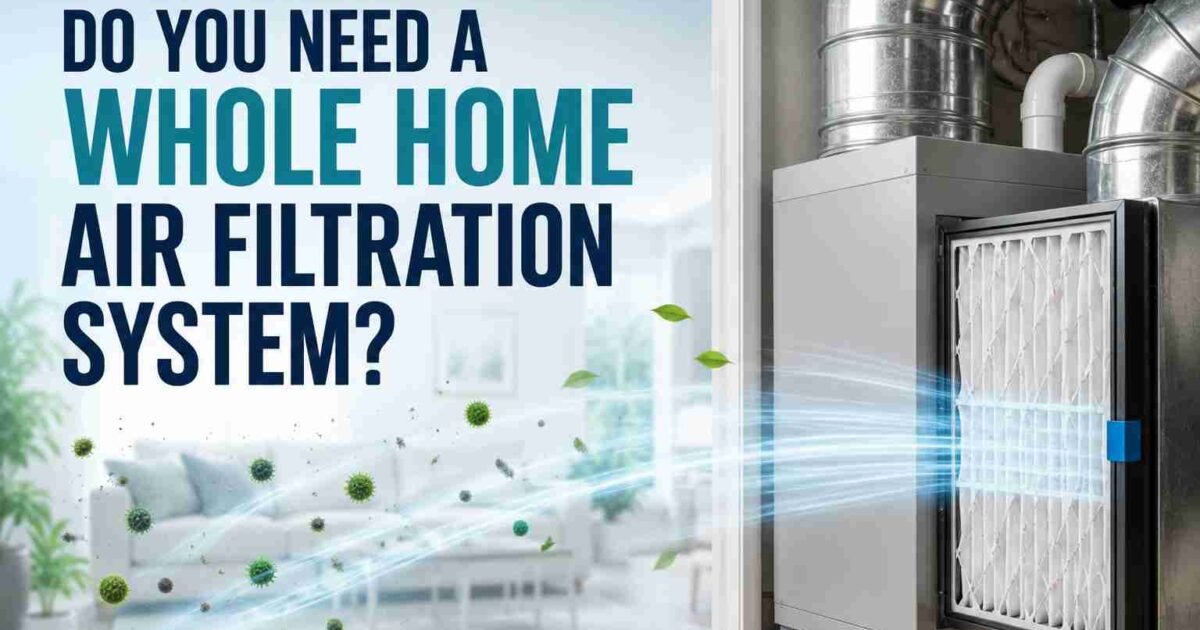
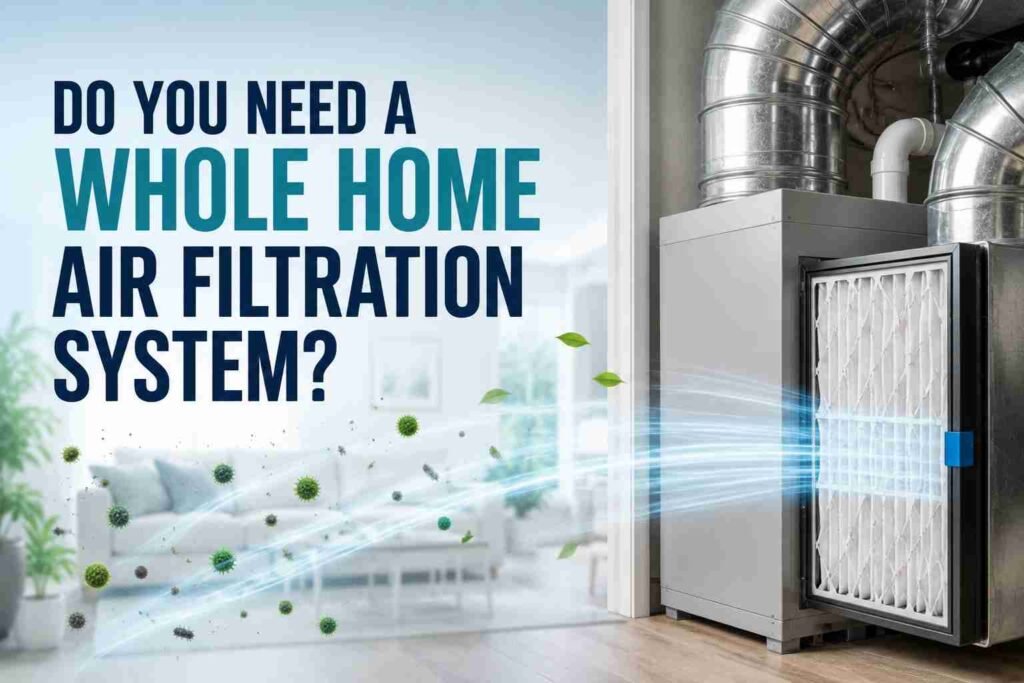
Basic filters often exist to protect HVAC equipment from larger debris. Whole home filtration systems go further. They work with heating and cooling equipment to capture finer particles moving through the air repeatedly.
That can include:
- Dust
- Pollen
- Pet dander
- Mold spores
- Smoke particles
- Other microscopic contaminants
Think of it less as “cleaning” air and more as reducing what continues circulating.
1. You Feel Better Outside Than You Do Indoors
This catches people off guard.
Someone expects symptoms to ease once they get home, but the opposite happens. Congestion lingers. Eyes feel irritated. Sneezing starts at night.
Indoor allergens accumulate quietly.
Pets, carpeting, upholstery, seasonal pollen carried indoors on clothing—all of it can remain inside much longer than expected.
When symptoms improve after leaving the house, indoor conditions become worth considering.
2. Dust Comes Back Faster Than It Should
Every home gets dusty.
The concern starts when cleaning feels pointless.
You wipe shelves. Vacuum corners. Two days later, sunlight hits the room a certain way and floating particles become visible again.
Excess dust doesn’t automatically mean poor filtration. But recurring buildup sometimes points toward airflow issues or filters not capturing enough material.
Homeowners often normalize this for years.
3. Certain Rooms Always Feel Heavy or Stuffy
Temperature and air quality aren’t the same thing.
A room can be warm enough and still feel uncomfortable.
Maybe an upstairs bedroom feels stale. Maybe a basement smells slightly musty despite being clean.
People notice these things without always connecting them to ventilation or circulating air.
The feeling is difficult to describe until it disappears.
4. There’s a Persistent Smell You’ve Stopped Noticing
Homes develop familiar scents.
Cooking. Pets. Laundry. Everyday living.
The problem comes when odors settle in and remain longer than expected.
Visitors sometimes notice first.
Stale indoor air can have several causes, but filtration and airflow are part of the conversation—especially in tightly sealed homes during colder months.
5. You Have Pets and Assume Extra Cleaning Solves Everything
Pet owners already know about fur.
Dander is different because you can’t always see it.
Even homes that appear spotless may still contain airborne particles released daily. Over time, these move through vents and collect throughout the house.
More cleaning helps. Sometimes better filtration helps too.
6. Renovations Finished Months Ago, but the House Still Feels Dusty
Anyone who has renovated understands how stubborn construction dust becomes.
Flooring replacement, drywall work, sanding—particles settle where people expect and where they don’t.
What surprises homeowners is how long those remnants may continue circulating.
If indoor air changed noticeably after renovations, it may not be coincidence.
7. Your HVAC System Seems to Need Constant Attention
Indoor air quality and HVAC performance overlap more than people realize.
When systems handle excess debris over long periods, buildup happens.
That doesn’t guarantee expensive repairs. It may simply mean equipment works harder than necessary.
Repeated maintenance calls sometimes start conversations about filtration.
Is a Whole Home Air Filtration System Worth Installing?
For some households, yes.
For others, standard filtration remains sufficient.
Homes with pets, allergy concerns, recurring dust problems, recent renovations, or frequent indoor discomfort tend to have more reasons to explore options.
The important part is avoiding assumptions.
Not every air quality problem requires a new system. Sometimes maintenance solves it. Sometimes airflow adjustments help. Sometimes filtration upgrades make sense.
The answer depends on the home itself.
Final Thoughts
Poor indoor air rarely announces itself dramatically.
More often, it shows up in small frustrations people adapt to: another dusty shelf, another restless night, another room that never feels completely comfortable.
After a while, those patterns stop feeling unusual.
That’s usually the moment worth paying attention.
For Calgary homeowners questioning whether indoor air quality is affecting comfort, professional HVAC assessment can help identify whether filtration, maintenance, or another solution is the better fit. Rapid Response Heating works with homeowners to evaluate heating, cooling, and indoor comfort concerns based on local conditions—not assumptions.
FAQs
Does every home need a whole home air filtration system?
No. Some homes function well with standard filtration. Need varies based on pets, allergies, dust levels, and indoor conditions.
Can wildfire smoke affect indoor air quality in Calgary?
Yes. During smoke events, airborne particles may enter homes and influence indoor comfort.
Will better filtration eliminate dust completely?
No filtration system removes all dust, but some help reduce circulating particles.
Are filtration systems only useful for allergy sufferers?
Not necessarily. Some homeowners consider them for dust control, pets, or indoor comfort concerns.
How can I know whether poor indoor air is affecting my home?
Recurring symptoms, persistent dust, stale air, or ongoing HVAC issues may justify a professional evaluation.